Nepal is agrarian country accounting eighty percentage of the total population of country living in rural areas. Their principal means of livelihood is agriculture and livestock. Livestock plays an important role in human food and nutritional security, livelihood, rural poverty alleviation and contributes approximately 11 percentage to Nepal’s Gross Domestic Product (MoLD, Livestock Statistics).
Livestock are key components of Nepal farming systems and are increasingly viewed as an important pathways to reduce rural poverty. Low quality and quantity of feeds are a major constraint limiting livestock productivity among small holder’s farmers.
Most fodder trees are multi-purposeful, providing nutritious food for livestock, firewood, seeds and also controls soil erosion. Further, it also provides solutions to deforestation reducing pressure on fodder and firewood collection in local/community forest in the area.
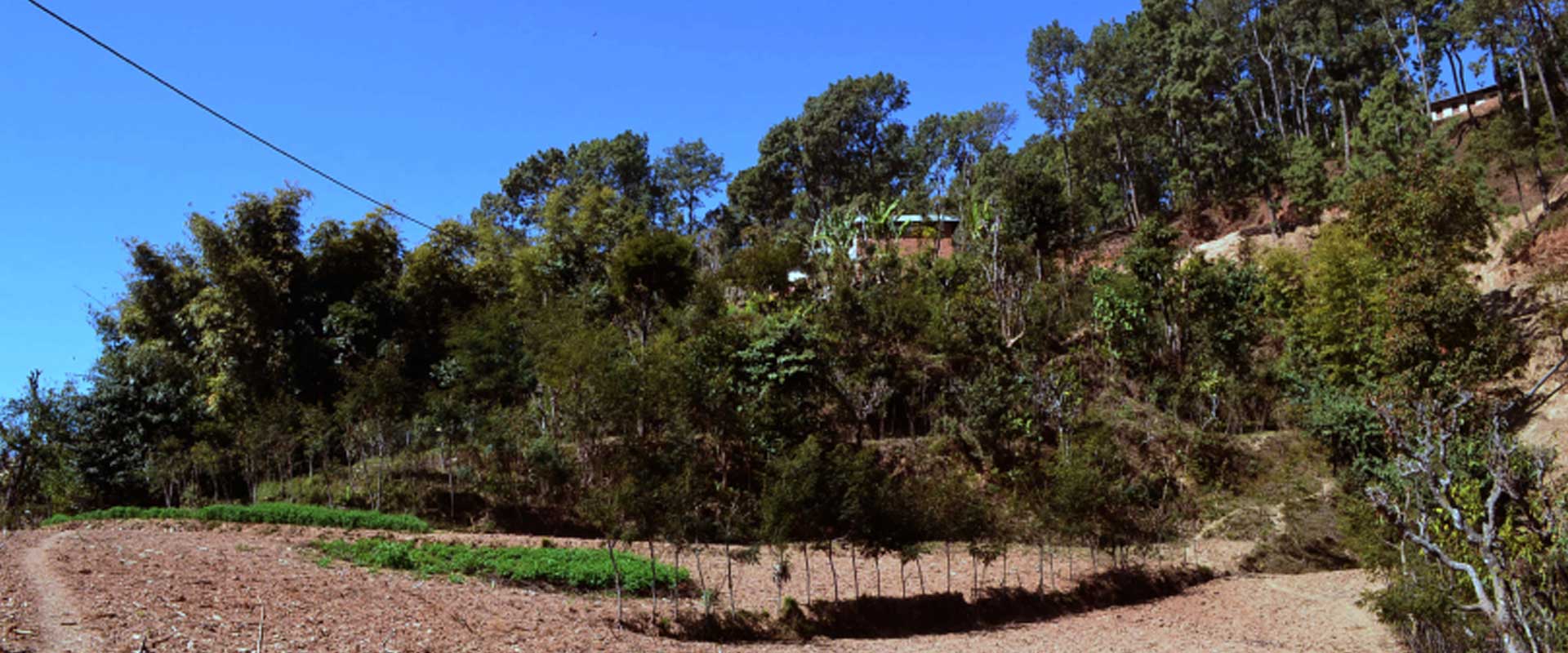
BSN conducted a cross learning visit to seventeen small holder farmers from Dangsingtar village where they learn about agro forestry, home nursery management and seedling production of fodder trees. Through this visit farmers were highly encouraged with the ideas of establishing their own backyard nurseries. All seventeen farmers planted thousands of fodder trees mostly Ipil-Ipil and Napier grass NB-21 in their backyard/ home garden. A farmer from the group prepare 2000 seedlings of Ipil Ipil which were distributed to other farmers in the village.
Those fodder species are easy to cultivate, fast growing with good yield for livestock raising in the district. Ipil Ipil is also used for firewood and control soil erosion. This initiation is expected to support those small holders’ farmers to raise their livestock; mostly cow, buffalo, goats and oxen in the community. The nutritious fodder will also increase milk production, growth of livestock those are targeted for meat production and also overall health of livestock. A part from these the backyard nursery will also help to reduce deforestation and will contribute to bio-diversity in the area. Besides these the farmers especially women’s burden to collect firewood and fodder is also expected to be reduced.
Ipil Ipil (Leucaena diversifolia) it is a multipurpose exotic fodder species that can be grown form Terai belt to mountains of Nepal which are 1300 meter above the sea level. It is a cold-tolerant species of leucaena and is psyllid resistant. This species shows good yield in Terai and Mountains areas across Nepal. It is fast growing, nutritious and also use for seedling and firewood production.
Napier grass NB-21 (Penisetum purpureaum) is a cross between Napier (Pennisetum purpureum) and Bajra (Pennisetum typhoides). It is a perennial grass which can be harvested for more than 3 –4 years. The grass shows good yield on the moist soils of mid-hills. Green fodder can be produced throughout the year, except in drought conditions. This species is resistant to pests and disease. This grass can be grown in under-utilized farm areas like in terrace risers and bund area.